The post explains why traditional Retrieval-Augmented Generation (RAG) approaches no longer scale and how modern architectures, including GraphRAG, address these limitations. It highlights why data quality, metadata, and disciplined system design matter more than models or frameworks, and provides a practical foundation for building robust RAG systems, illustrated with IBM technologies but applicable far beyond them.
AI-Generated Software, Patents, and Global IP Law — A First Deep Dive using AI
The content explores the evolving role of AI in creative processes and its implications for intellectual property (IP) law. It highlights challenges around ownership, patentability, and copyright concerning AI-generated works. As AI advances, existing legal frameworks struggle to keep pace, prompting questions about creativity, innovation, and the need for new regulations.
Update Ollama to use Granite 4 in VS Code with watsonx Code Assistant
This post is about setup to utilize Granite 4 models in Ollama for VS Code with watsonx Code Assistant. The process includes inspecting available models, uninstalling old versions, installing new models, and configuring them for effective use. The experience emphasizes exploration and learning in a private, efficient AI development environment.
Access watsonx Orchestrate functionality over an MCP server
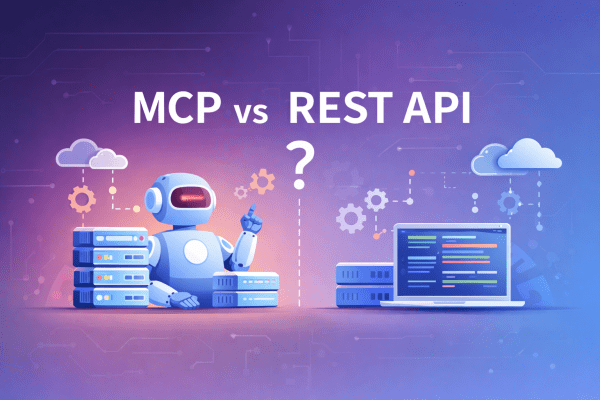
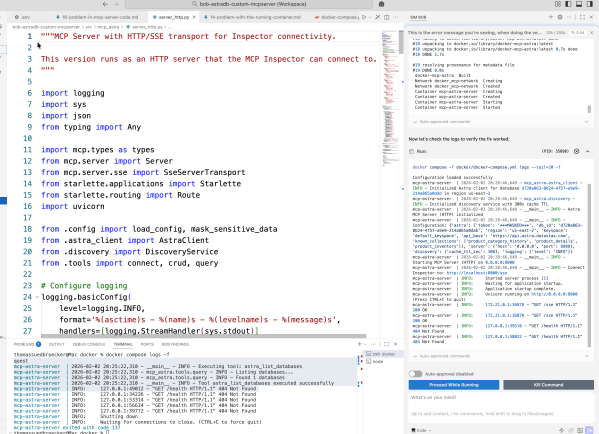
The Model Context Protocol (MCP) is being increasingly utilized in AI applications, particularly with the watsonx Orchestrate ADK. This setup allows users to develop and manage agents and tools through a seamless integration of the MCP server and the Development Edition, enhancing user interaction and functionality in coding environments.
Adding a Custom Langflow Component to watsonx Orchestrate — A Short Personal Journey
This blog post outlines a practical example of setting up a custom component in Langflow to connect with an external weather API and import it into the watsonx Orchestrate Development Edition. The process emphasizes learning through experimentation rather than achieving a flawless solution, highlighting the potential of Langflow and watsonx Orchestrate for AI development.
It’s All About Risk-Taking: Why “Trustworthy” Beats “Deterministic” in the Era of Agentic AI
This post explores how Generative AI and Agentic AI emphasize trustworthiness over absolute determinism. As AI's role in enterprises evolves, organizations must focus on building reliable systems that operate under risk, balancing innovation with accountability. A personal perspective.
Cheat Sheet & Mini-Tutorial: watsonx Orchestrate CLI (for local dev & remote config)
This guide explains the essentials of using the watsonx Orchestrate CLI, covering setup, agents, connections, and loading an IBM watsonx.ai model. It provides a reliable reference for activating environments, managing agents, configuring connections, and importing models, ensuring clarity for users in day-to-day operations.
How to Build a Knowledge Graph RAG Agent Locally with Neo4j, LangGraph, and watsonx.ai
The post discusses integrating Knowledge Graphs with Retrieval-Augmented Generation (RAG), specifically using Neo4j and LangGraph. It outlines an example setup where extracted document data forms a structured graph for querying. The system enables natural question-and-answer interactions through AI, enhancing information retrieval with graph relationships and embeddings.
Testing AI Agents with the watsonx Orchestrate Agent Developer Kit (ADK)- Evaluation Framework – A Hands-on Example
The post outlines using the Evaluation Framework in watsonx Orchestrate ADK to verify AI Agent behavior through a practical example: Galaxium Travels, a fictional booking system. It details setting up the environment, defining user Stories, generating synthetic Test Cases, and running evaluations, crucial for ensuring AI reliability and transparency.
Integrating watsonx Orchestrate Agent Chat in Web Apps
This blog post demonstrates the usage of the web channel functionality in watsonx Orchestrate, enabling the embedding of conversational AI agents into custom web applications. It guides users through setting up a remote environment, generating source code, and running a web server to invoke chat features, emphasizing ease of use and customization options.