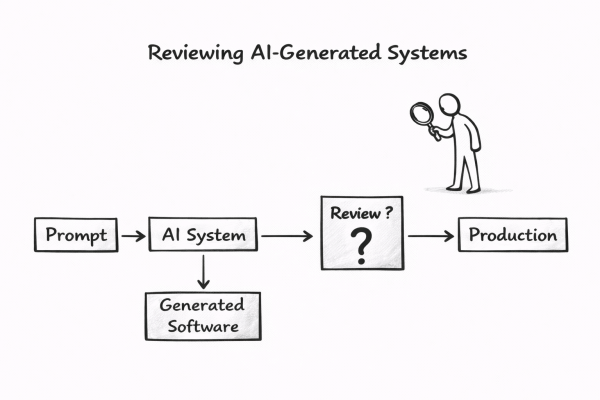
This article explores why governance becomes more important as software engineering becomes increasingly automated. It describes the evolution from human-centric development to AI-assisted and agentic engineering, where AI systems no longer only generate code but increasingly participate in engineering decisions. The main argument is that faster software creation does not automatically lead to better software. As AI accelerates implementation, accountability, traceability, reviewability, and human approval become more important. Effective governance allows organizations to use AI capabilities without losing human responsibility. It helps make AI-assisted software engineering more transparent, more reviewable, and more trustworthy.
From AI Coding Assistants to Autonomous Engineering Systems