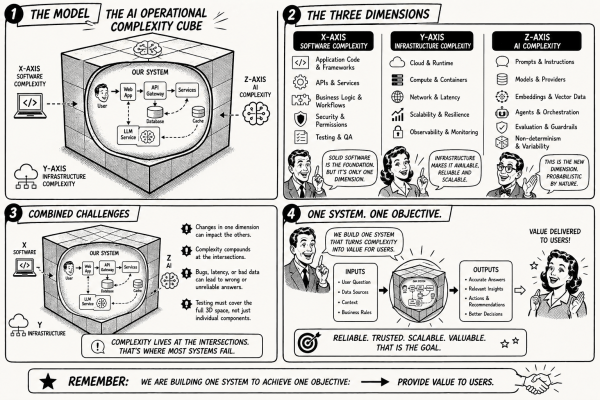
The article continues the exploration of the AI Operational Complexity Cube, emphasizing that modern AI systems encompass software, infrastructure, and probabilistic AI components. It highlights the need for comprehensive testing approaches that consider interactions across these dimensions, as proper evaluation requires observing behaviors that emerge from integrated systems rather than isolated code.
AI Conference 2026 — When Observations Become Confirmation About Real AI Systems
The AI Conference 2026 highlighted the evolution of AI discussions from theoretical capabilities to operational realities. Key themes included the importance of data quality, operational complexity, and risk management. Attendees noted a shift in software development roles towards reviewing AI outputs, emphasizing the need for understanding real problems rather than solely implementing complex solutions.
The Cup Is Not the Coffee: What Data Quality Means in the AI Era
AI systems rely heavily on data quality, which is often overlooked despite modern technical architectures. Issues like outdated, incomplete, or misaligned data can undermine system reliability, regardless of the sophistication of the components. Effective AI requires both high-quality data and solid technical infrastructure to meet user expectations and ensure trust.
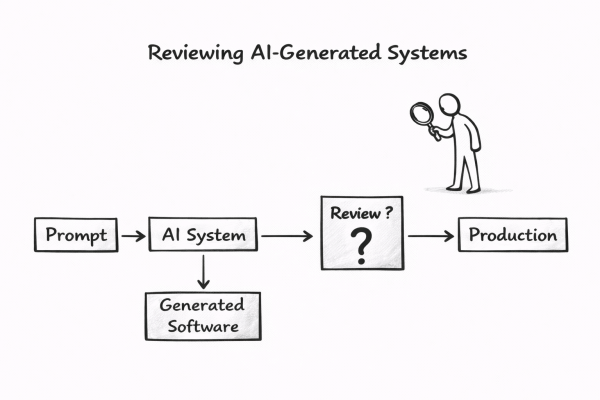
Who Reviews AI-Generated Software?
AI is transforming the software development lifecycle, shifting focus from coding to reviewing AI-generated systems. While AI tools simplify software generation, building trustworthy systems remains complex. Traditional review processes may no longer suffice. This raises a critical question: how can humans responsibly.