The blog post explores integrating ChatWatsonx with LangChain for function calls, using a weather example. It aims to understand AI agent tools and actions. The process includes defining tools functions, creating WatsonxChat instance, and implementing a structured ChatPromptTemplate. While not fully successful, it highlights the importance of the prompt.
Python PDF to JSON Conversion for Efficient Data Pre-processing
Converting PDF to JSON is a simple task that uses Python. Converting can be helpful in various pre-processing situations involving data.
CheatSheet: How to ensure you use the right Python environment in VS Code interpreter settings?
This post covers to ensure you set the virtual environment for Python in VS Code using venv. It details creating and activating a Python venv, and ensuring it’s used in VS Code environments. The steps include opening the VS Code command palette, selecting an interpreter, and navigating to the pyvenv.cfg file.
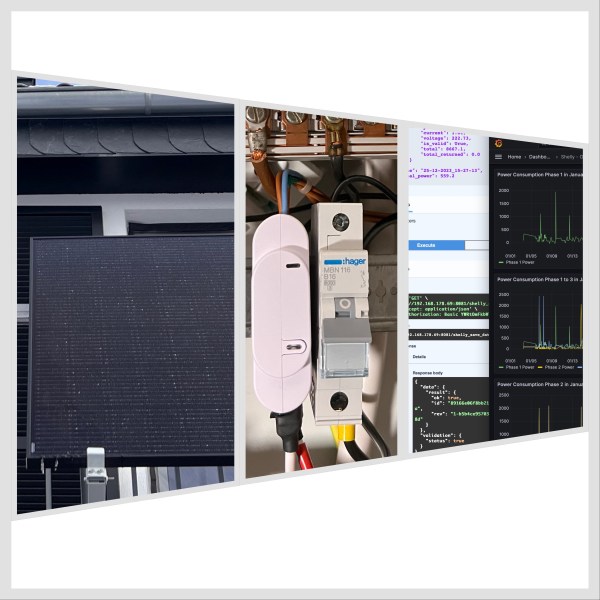
Unleash your creativity and design a custom visualization for the Shelly 3EM device with Grafana
The blog post details an example implementation of a connection server using Shelly 3EM, IBM Cloud Cloudant, and Grafana. It aims to store historical data for visualizing electricity consumption. The project involves detailed architecture, environment setup, Python, FastAPI, Podman, and more usage. The setup covers Raspberry Pi, Podman Compose, and IBM Cloud Code Engine environments, with prerequisites and detailed configurations. The approach allows users to monitor and visualize power consumption efficiently and cost-effectively using Grafana.
How do you initially set up a Virtual Server Instance with a GPU in IBM Cloud?
Generative AI offers diverse business opportunities, often requiring GPU for intensive computing. IBM Cloud provides easy GPU instantiation with Virtual Server Instance (VSI) in a Virtual Private Cloud, available in minutes with pay-per-usage. This guide covers VPC configuration, VSI setup with GPU, SSH access, GPU accessibility in Ubuntu, and GPU verification in Python.
How to create a FastAPI server to use OpenAI models
Last time, I wrote a blog post about "IBM Watsonx.ai and a simple question-answering pipeline using Python and FastAPI", and I had an exchange with my family about an OpenAI sample for a FastAPI application, so I created a small FastAPI server to access OpenAI with Python.
How to set up a virtual environment for Python
This blog post is a small cheat sheet on setting up a virtual environment for Python venv.
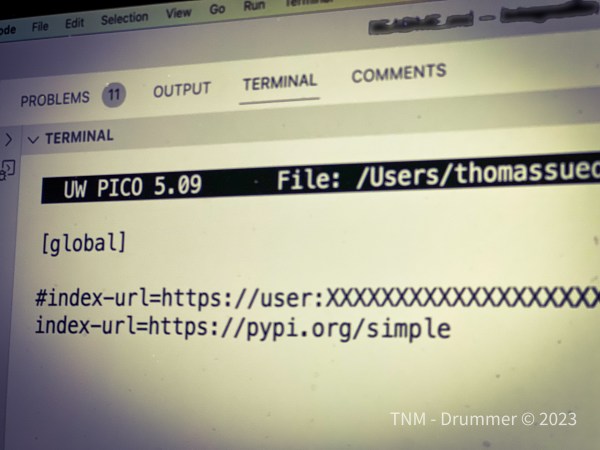
Change the index-url in pip.conf
You may run into the situation that you can't install libraries for Python on your local computer.
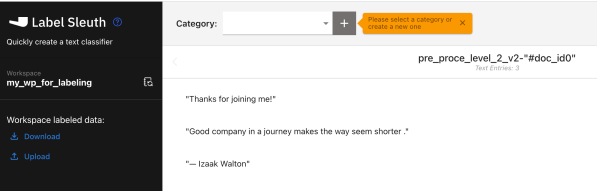
Use Label Sleuth to build your train and test data input
This blog post is written in the context of creating a text classification model. The objective is to build and train a text classification model to identify topics in a text. These topics are Kubernetes and Watson NLP. As the train and test data, we will use an export from my blog on wordpress.com. This data we will label this with the open-source tool called Label Sleuth.
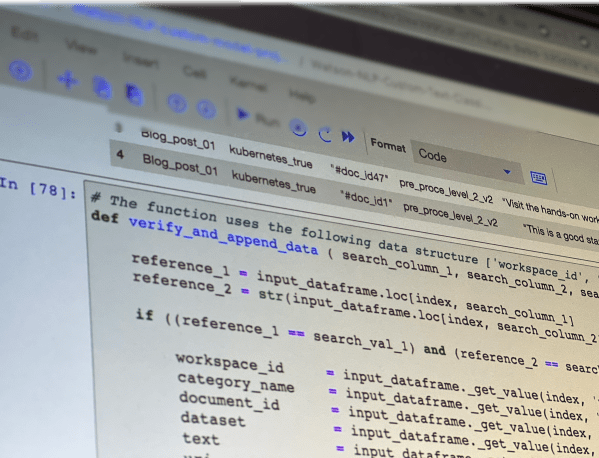
A way to build a DataFrame from a DataFrame in a Jupyter Notebook with Python
This blog post contains an extract of a Jupyter Notebook and shows a way how to create a new DataFrame by building an extraction of two specific columns and their values of an existing DataFrame.