This is my next blog post related to operators. That blog post is about adding a new API version to our existing example Multi Tenancy Frontend Operator. When we have added the new API version we will deploy the changed operator to a Kubernetes cluster using the Operator Lifecycle Manager (OLM).
Deploy an operator without the Operator SDK
That is the next blog post related to operators. Now it’s about deploy an operator without the Operator SDK. In the last blog post we used the operator-sdk run bundle command which created for us all needed specifications and images to run the bundle. Therefor we need to take a closer look into the Operator Lifecycle Manager (OLM).
Run an operator using a bundle with an Operator Lifecycle Manager (OLM)
In that blog post we focus on get the operator installed using the bundle running on a Kubernetes cluster with an Operator Lifecycle Manager (OLM) installed. Surely, the Go Lang tutorial and Getting started OLM can be useful in that context.
How to create a bundle for an operator?
In that blog post we will focus on: Creating a bundle for the example operator. That bundle will be used to install the example frontend operator using an Operator Lifecycle Manager (OLM).
Run an operator as a deployment
This blog post is about: How to run the example Multi Tenancy Frontend Operator as a deployment on a Kubernetes cluster.
How to extend a Custom Resource Definition for a GO Operator?
That blog post is about some basics how to extend a Custom Resource Definition in a GO Operator. For an Operator implementation you need a Custom Resource Definition and a controller implementation. The Custom Resource Definition for an operator is the basic first step to extend the Kubernetes API with your own functionalities. Usually you create a Custom Resource Definition before you write the controller for your operator.
How to delete services, secrets, and deployments related to a Custom Resource Object in a GO Operator?
This blog post is related to the blog post DEVELOP A SIMPLE OPERATOR TO DEPLOY A WEB APPLICATION USING THE GO OPERATOR SDK. In that last blog post we addressed the topic get a web frontend application running on Kubernetes using a GO Operator. An important part in that scenario is also, how to manage the clean-up for an application instance and it’s related Kubernetes resources and objects created by the operator based on the Custom Resource Object, or: How to delete services, secrets, and deployments related to a Custom Resource Object in a GO Operator?
Debug a Kubernetes Operator written in GO
In this blog post I want to share how to debug a GO Operator on your local machine on macOS. Adam de Leeuw and I verified it in different GO operator projects. Sometimes you find on Google information which uses the older Operator SDK. The following instructions worked for us in March 2022. 😉
Develop a simple operator to deploy a web application using the GO Operator SDK
This blog post is a bigger cheat sheet about how to start with an operator implementation with the GO Operator SDK and also contains some details how to define Kubernetes deployments, secrets, and services.
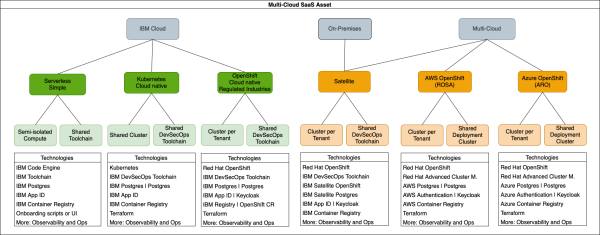
New Open-Source Multi-Cloud Asset to build SaaS
When software is provided as a managed service (SaaS), using a multi-tenant approach helps minimise costs for the deployments and operations of each tenant. In order to leverage these advantages, applications need to be designed so that they can be deployed to support multiple tenants, while maintaining isolation for security reasons. At the same time, common deployment and operation models are required so that new SaaS versions can be deployed to existing tenants, or to onboard new tenants, in a reliable and efficient way.