This post shares lessons from a 14-day engineering project using IBM Bob’s Agentic IDE. It is not a product review or benchmark, but a personal experience report about how intensive Agentic Coding changed the author’s engineering behavior. A central observation is the “Navigation System Syndrome”: as trust in the Agentic IDE increased, the author worked at a higher abstraction level and inspected fewer implementation details. The post explores why continuous specification management, verification, documentation, observability, Engineering Provenance, and human responsibility remain essential when AI becomes a more capable part of software engineering.
Agent Harness in 2026: Hype Word, Industry Term, or Useful Technical Concept?
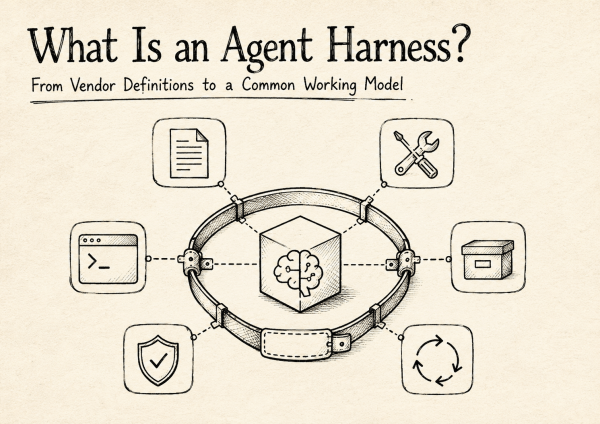
The term "agent harness" has gained prominence across major AI platforms like OpenAI, IBM, and Google, yet lacks a unified definition. Various companies utilize it differently, emphasizing its role in coordinating AI models with context and execution. This post explores the term's meaning and its significance within AI development frameworks.
From Idea to Responsibility: Why AI Coding Needs Engineering Provenance
AI coding agents increasingly participate in planning, implementation, review, testing, and documentation. This raises a new engineering question: who actually created the software artifact? This post explores why Git history alone is no longer sufficient, how engineering provenance could capture the role of humans, agents, models, tools, and context, and why this matters for intellectual property, accountability, and risk. The broader shift may no longer be from coding to review, but from idea to responsibility.