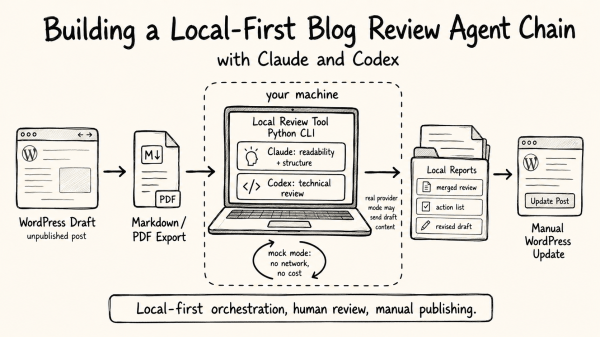
I built a local-first Python CLI that reviews unpublished blog drafts with Claude and Codex in sequence. The tool keeps orchestration, reports, and publishing manual, while supporting mock mode for no-network testing. This post explains the workflow, privacy boundaries, provider authentication, and why human review remains essential.
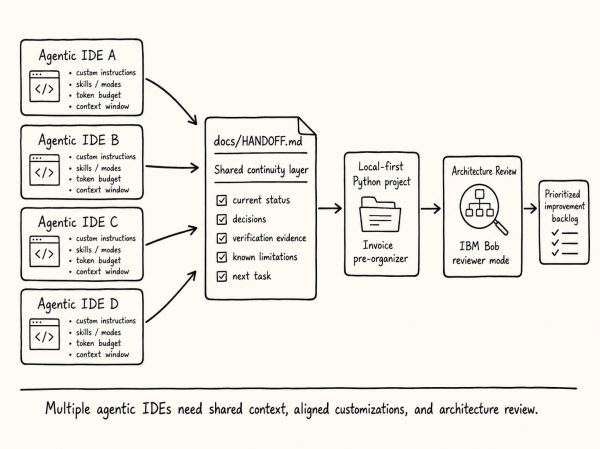
Coordinating Multiple Agentic IDEs with a Shared Handoff File
In this post, I explore a lightweight handoff pattern for coordinating GitHub Copilot, OpenAI Codex, Claude Code, and IBM Bob in one local-first Python project. The goal: reduce context loss, make agent work traceable, and turn AI-assisted coding into a more structured engineering workflow.
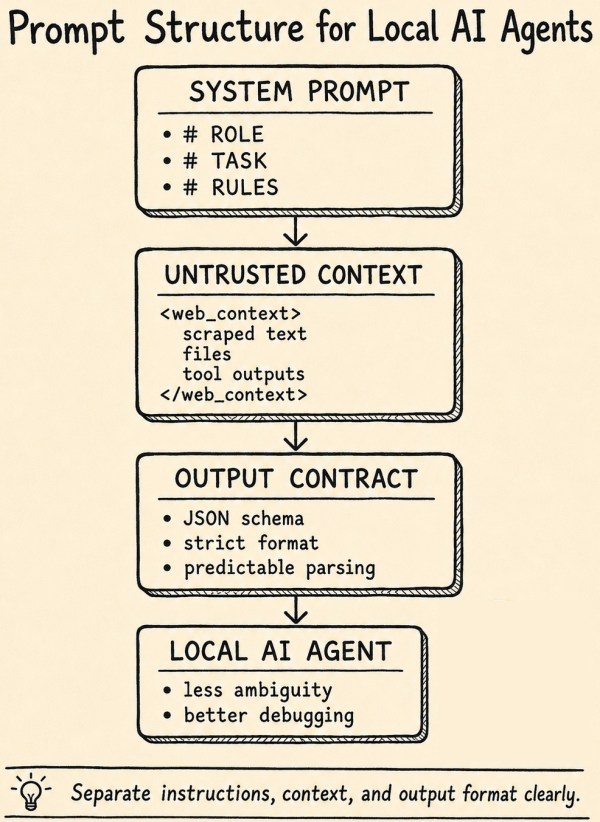
Prompting Cheat Sheet for Local LLMs and Autonomous Agents
This post shows the importance of clear prompt structure when developing local AI agents with frameworks like LangGraph and Ollama. Smaller models are less tolerant of ambiguities, making it crucial to separate instructions, context, and output formats. This enhances reliability, debugging, and reduces risks from untrusted inputs.
AI Decision-Making: Who’s Responsible When Things Go Wrong?
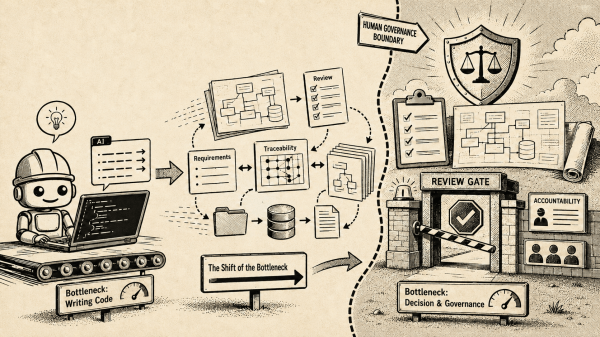
The blog post by Thomas Suedbroecker addresses the evolving governance challenges as AI becomes an active participant in engineering decision-making. It highlights the shift from human-centric to AI-assisted development and the resulting review gap. The author proposes specialized governance structures and emphasizes the importance of traceability for accountability in automated environments.
From AI Coding Assistants to Autonomous Engineering Systems
This article explores why governance becomes more important as software engineering becomes increasingly automated. It describes the evolution from human-centric development to AI-assisted and agentic engineering, where AI systems no longer only generate code but increasingly participate in engineering decisions. The main argument is that faster software creation does not automatically lead to better software. As AI accelerates implementation, accountability, traceability, reviewability, and human approval become more important. Effective governance allows organizations to use AI capabilities without losing human responsibility. It helps make AI-assisted software engineering more transparent, more reviewable, and more trustworthy.