This post shares lessons from a 14-day engineering project using IBM Bob’s Agentic IDE. It is not a product review or benchmark, but a personal experience report about how intensive Agentic Coding changed the author’s engineering behavior. A central observation is the “Navigation System Syndrome”: as trust in the Agentic IDE increased, the author worked at a higher abstraction level and inspected fewer implementation details. The post explores why continuous specification management, verification, documentation, observability, Engineering Provenance, and human responsibility remain essential when AI becomes a more capable part of software engineering.
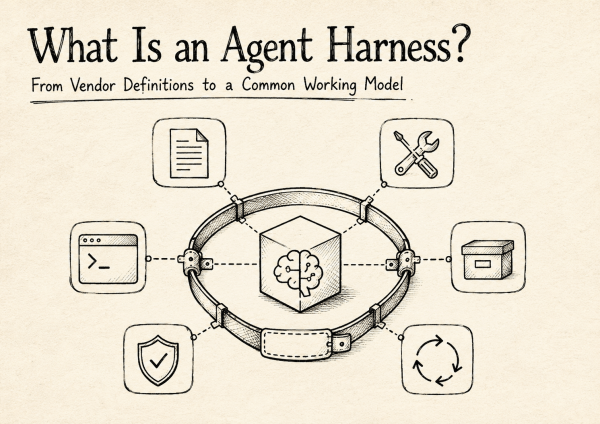
Agent Harness in 2026: Hype Word, Industry Term, or Useful Technical Concept?
The term "agent harness" has gained prominence across major AI platforms like OpenAI, IBM, and Google, yet lacks a unified definition. Various companies utilize it differently, emphasizing its role in coordinating AI models with context and execution. This post explores the term's meaning and its significance within AI development frameworks.
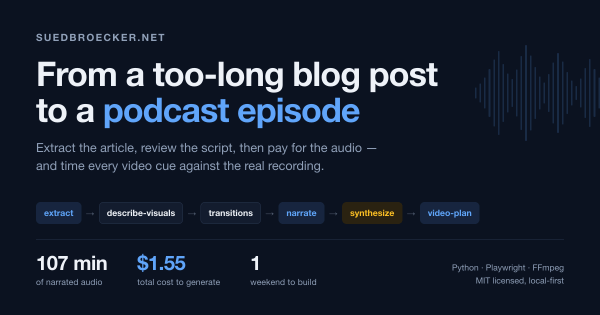
I Spent a Weekend Building a Podcast Generator for My Own Too-Long Blog Posts
The content details the creation of a tool for converting written posts into narrated audio and video formats using Codex CLI and Claude Code. It covers the tool's functionality, costs, and lessons learned during development, emphasizing accurate audio synchronization and transcript quality. The tool is open-source and freely usable for personal posts.
The Rise of Multi-Model Engineering: Is IBM Bob Already Built for the Next Phase?
AI-assisted development is shifting from single-model tools to multi-model and multi-agent engineering. This article explores how IBM Bob, GitHub Copilot, Gemini CLI, Claude Code, and OpenAI Codex orchestrate models—and why the orchestration layer is becoming the real platform.