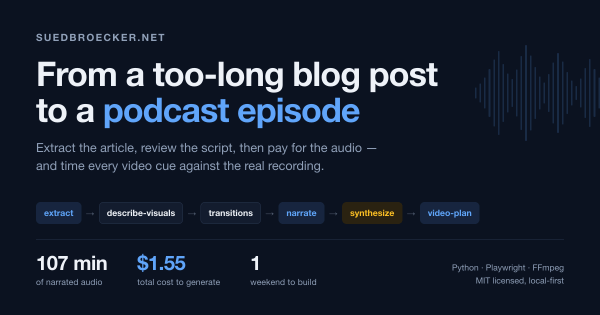
The content details the creation of a tool for converting written posts into narrated audio and video formats using Codex CLI and Claude Code. It covers the tool's functionality, costs, and lessons learned during development, emphasizing accurate audio synchronization and transcript quality. The tool is open-source and freely usable for personal posts.
The Rise of Multi-Model Engineering: Is IBM Bob Already Built for the Next Phase?
AI-assisted development is shifting from single-model tools to multi-model and multi-agent engineering. This article explores how IBM Bob, GitHub Copilot, Gemini CLI, Claude Code, and OpenAI Codex orchestrate models—and why the orchestration layer is becoming the real platform.
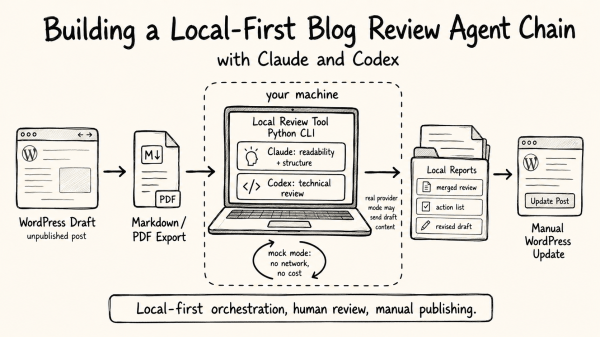
Building a Local-First Blog Review Agent Chain with Claude and Codex
I built a local-first Python CLI that reviews unpublished blog drafts with Claude and Codex in sequence. The tool keeps orchestration, reports, and publishing manual, while supporting mock mode for no-network testing. This post explains the workflow, privacy boundaries, provider authentication, and why human review remains essential.
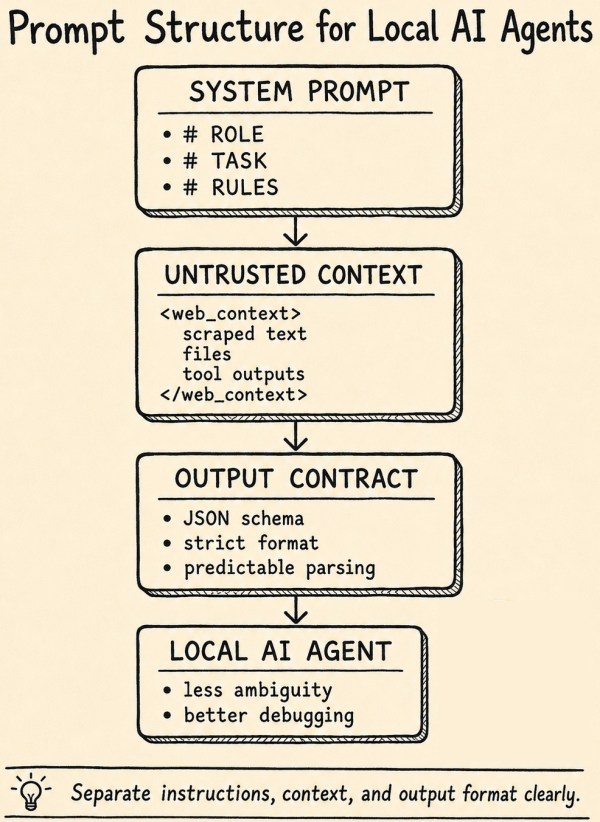
Prompting Cheat Sheet for Local LLMs and Autonomous Agents
This post shows the importance of clear prompt structure when developing local AI agents with frameworks like LangGraph and Ollama. Smaller models are less tolerant of ambiguities, making it crucial to separate instructions, context, and output formats. This enhances reliability, debugging, and reduces risks from untrusted inputs.
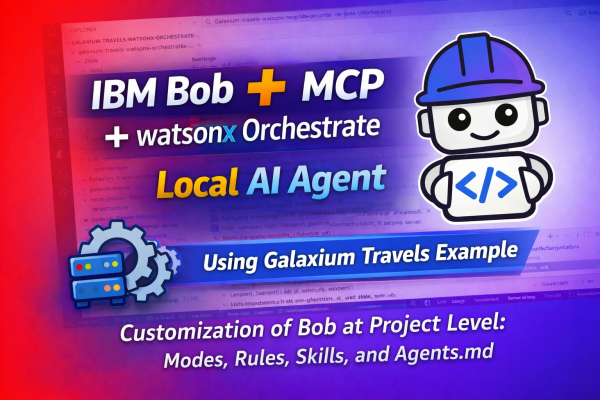
Using IBM Bob, MCP, and watsonx Orchestrate to Generate an Agent
This post discusses a local setup utilizing IBM Bob to generate an agent for watsonx Orchestrate, specifically with tools from the Galaxium Travels MCP server. It explains the architecture, customization of Bob, and integration with various components, providing both learning and practical implementation value for developers.
Should MCP Replace REST for AI-Ready Applications?
The article explores the potential for using the Model Context Protocol (MCP) as a primary backend interface instead of traditional REST APIs in AI-enabled applications. Through the Galaxium Travels experiment, it examines the advantages and disadvantages of an MCP-first architecture, advocating for its use to reduce duplication and complexity while acknowledging REST's established role in many ecosystems.