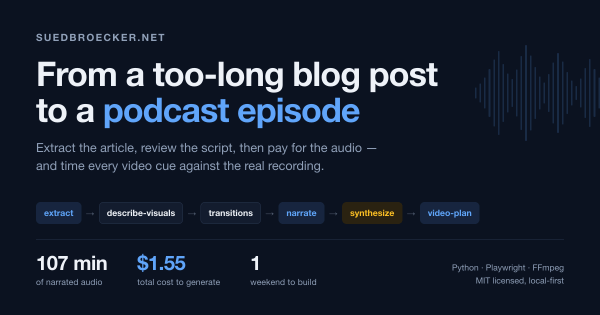
The content details the creation of a tool for converting written posts into narrated audio and video formats using Codex CLI and Claude Code. It covers the tool's functionality, costs, and lessons learned during development, emphasizing accurate audio synchronization and transcript quality. The tool is open-source and freely usable for personal posts.
The Rise of Multi-Model Engineering: Is IBM Bob Already Built for the Next Phase?
AI-assisted development is shifting from single-model tools to multi-model and multi-agent engineering. This article explores how IBM Bob, GitHub Copilot, Gemini CLI, Claude Code, and OpenAI Codex orchestrate models—and why the orchestration layer is becoming the real platform.
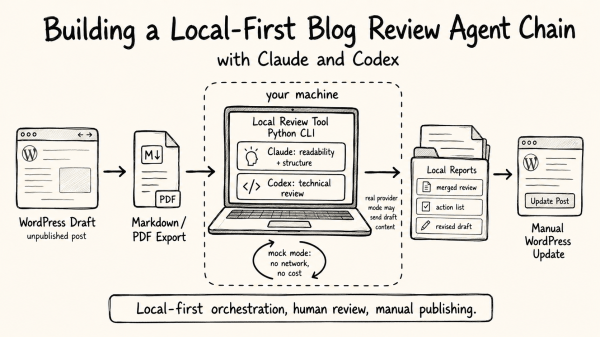
Building a Local-First Blog Review Agent Chain with Claude and Codex
I built a local-first Python CLI that reviews unpublished blog drafts with Claude and Codex in sequence. The tool keeps orchestration, reports, and publishing manual, while supporting mock mode for no-network testing. This post explains the workflow, privacy boundaries, provider authentication, and why human review remains essential.
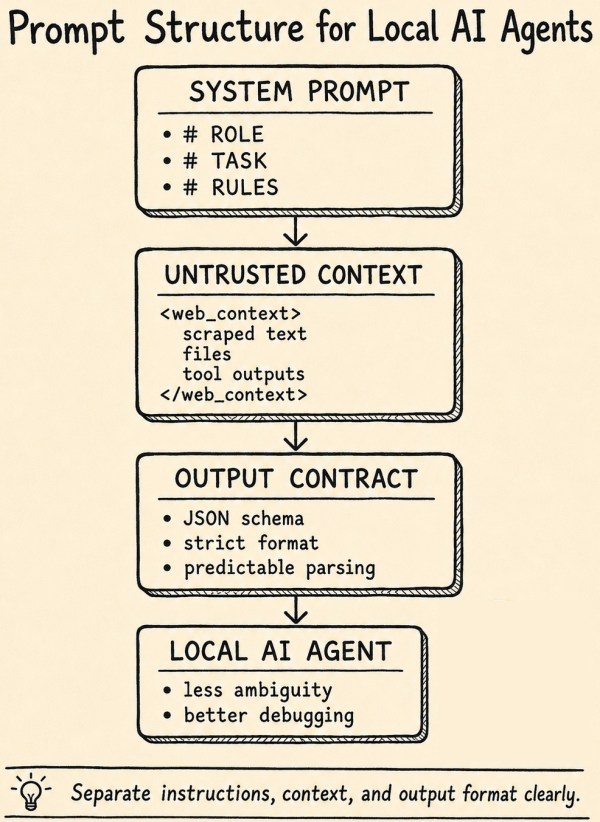
Prompting Cheat Sheet for Local LLMs and Autonomous Agents
This post shows the importance of clear prompt structure when developing local AI agents with frameworks like LangGraph and Ollama. Smaller models are less tolerant of ambiguities, making it crucial to separate instructions, context, and output formats. This enhances reliability, debugging, and reduces risks from untrusted inputs.
From AI Coding Assistants to Autonomous Engineering Systems
This article explores why governance becomes more important as software engineering becomes increasingly automated. It describes the evolution from human-centric development to AI-assisted and agentic engineering, where AI systems no longer only generate code but increasingly participate in engineering decisions. The main argument is that faster software creation does not automatically lead to better software. As AI accelerates implementation, accountability, traceability, reviewability, and human approval become more important. Effective governance allows organizations to use AI capabilities without losing human responsibility. It helps make AI-assisted software engineering more transparent, more reviewable, and more trustworthy.
AI Conference 2026 — When Observations Become Confirmation About Real AI Systems
The AI Conference 2026 highlighted the evolution of AI discussions from theoretical capabilities to operational realities. Key themes included the importance of data quality, operational complexity, and risk management. Attendees noted a shift in software development roles towards reviewing AI outputs, emphasizing the need for understanding real problems rather than solely implementing complex solutions.
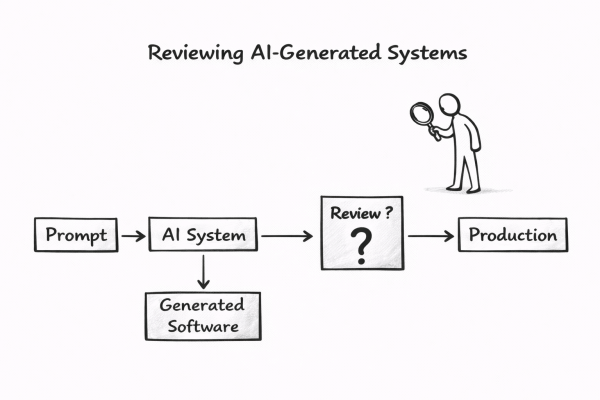
Who Reviews AI-Generated Software?
AI is transforming the software development lifecycle, shifting focus from coding to reviewing AI-generated systems. While AI tools simplify software generation, building trustworthy systems remains complex. Traditional review processes may no longer suffice. This raises a critical question: how can humans responsibly.