This cheat sheet provides a two-step guide for adding users to your watsonx project in IBM Cloud.
CheatSheet: How to add users to your watsonx project?


I want to share my experience in the cloud, AI, and agents development areas.
This cheat sheet provides a two-step guide for adding users to your watsonx project in IBM Cloud.

The blog post details an example implementation of a connection server using Shelly 3EM, IBM Cloud Cloudant, and Grafana. It aims to store historical data for visualizing electricity consumption. The project involves detailed architecture, environment setup, Python, FastAPI, Podman, and more usage. The setup covers Raspberry Pi, Podman Compose, and IBM Cloud Code Engine environments, with prerequisites and detailed configurations. The approach allows users to monitor and visualize power consumption efficiently and cost-effectively using Grafana.
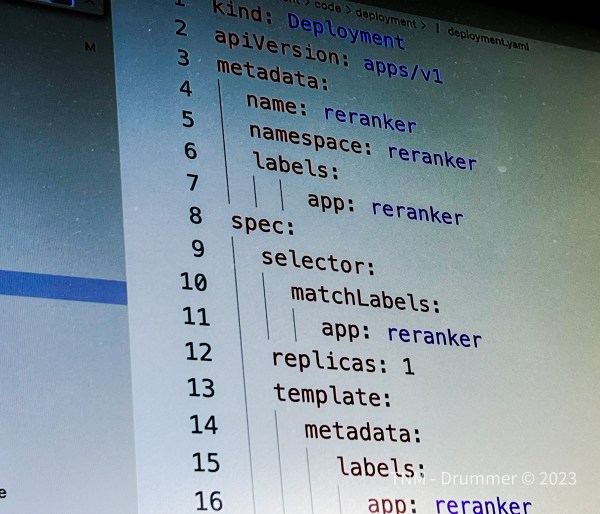
The objective of this project is to deploy the Reranker to a Kubernetes cluster in a VPC on IBM Cloud and access the REST API of the Reranker. The Reranker is a component of PrimeQA.

This is a short example/cheat sheet about, how to use the new module called terraform-ibm-observability-instances to plan service instances on IBM Cloud with Terraform. You can find the source code for the example of the blog post in this GitHub repository Example to use the IBM Observability Module. In this example we plan to create an Activity Tracker, a Log Analysis, and a Monitoring service instance on IBM Cloud with Terraform.

My last blog post was about Watson Speech to Text language model customization and this blog post is about IBM Cloud Watson Text to Speech (TTS) custom voice model configuration. Because, now it's time to have some fun with the Watson TTS service. I created a fun customisation of the service that the German pronunciation sounds a little bit like the palatinate dialect. Here are the differences with two wav file I created with a custom Watson to Text to Speech voice model.
This blog post contains a simply example to create a Virtual Private Cloud and a Kubernetes Cluster on IBM Cloud using Terraform.

This blog post is a short cheat sheet to remember how to configure the access to a GitLab project on IBM Cloud from a local computer. An important part in that situation is you need to configure a ssh key for your computer and save this key in GitLab on IBM Cloud. The remaining parts is how... Continue Reading →
This is a simple cheat sheet which has these two simple objectives: How to create a group in this GitLab instance and add a member.How to create a project for that group. You need an IBM Cloud Account to access the internal IBM Cloud GitLab and you need to see this in context with the... Continue Reading →
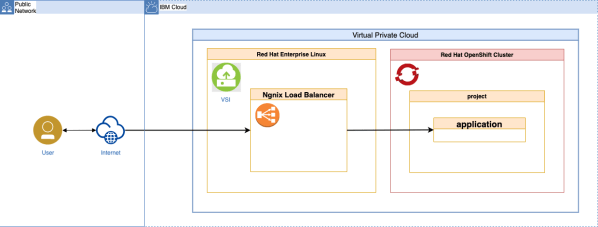
This blog post is a (bigger) cheat sheet about: - How to setup a simple Ngnix as a load balancer on a Virtual Server Instance (VSI) that runs in a Virtual Private Cloud (VPC)? - How to configure a Red Hat OpenShift project, to allow a REST endpoint invocation of an application inside the OpenShift project from a VSI instance that runs in the same VPC as the Red Hat OpenShift cluster?

This blog post is about automating the creation of a Red Hat OpenShift cluster on IBM Cloud in a Virtual Private Cloud. I used bash scripting with the IBM Cloud CLI and and the associated IBM Cloud CLI plugins vpc-infrastructure and kubernetes-service. I also use jq to handle json output.
 Thomas Suedbroecker's Blog