14 Days of Intensive “Agentic Coding”: What I Learned from Working with IBM Bob, an Agentic IDE

This post shares lessons from a 14-day engineering project using IBM Bob’s Agentic IDE. It is not a product review or benchmark, but a personal experience report about how intensive Agentic Coding changed the author’s engineering behavior. A central observation is the “Navigation System Syndrome”: as trust in the Agentic IDE increased, the author worked at a higher abstraction level and inspected fewer implementation details. The post explores why continuous specification management, verification, documentation, observability, Engineering Provenance, and human responsibility remain essential when AI becomes a more capable part of software engineering.

From Idea to Responsibility: Why AI Coding Needs Engineering Provenance

AI coding agents increasingly participate in planning, implementation, review, testing, and documentation. This raises a new engineering question: who actually created the software artifact? This post explores why Git history alone is no longer sufficient, how engineering provenance could capture the role of humans, agents, models, tools, and context, and why this matters for intellectual property, accountability, and risk. The broader shift may no longer be from coding to review, but from idea to responsibility.

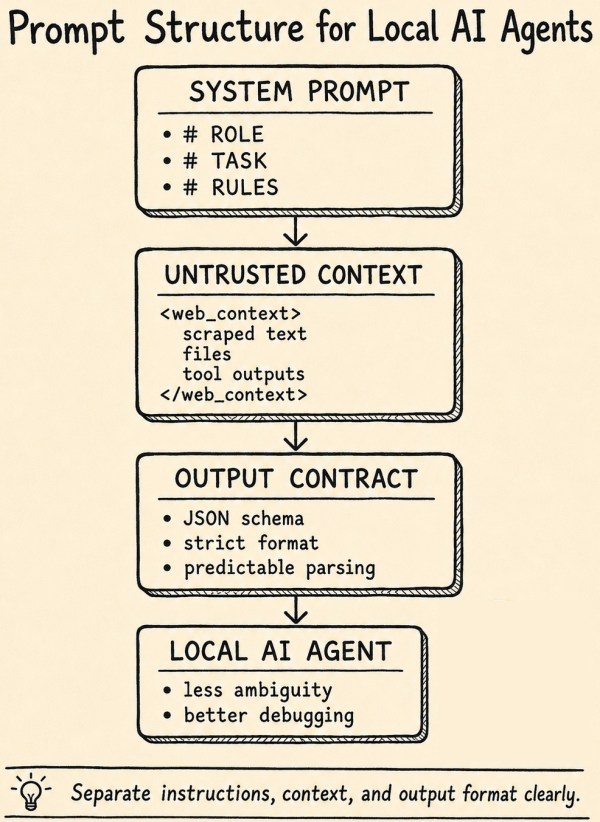
Prompting Cheat Sheet for Local LLMs and Autonomous Agents

This post shows the importance of clear prompt structure when developing local AI agents with frameworks like LangGraph and Ollama. Smaller models are less tolerant of ambiguities, making it crucial to separate instructions, context, and output formats. This enhances reliability, debugging, and reduces risks from untrusted inputs.

From AI Coding Assistants to Autonomous Engineering Systems

This article explores why governance becomes more important as software engineering becomes increasingly automated. It describes the evolution from human-centric development to AI-assisted and agentic engineering, where AI systems no longer only generate code but increasingly participate in engineering decisions. The main argument is that faster software creation does not automatically lead to better software. As AI accelerates implementation, accountability, traceability, reviewability, and human approval become more important. Effective governance allows organizations to use AI capabilities without losing human responsibility. It helps make AI-assisted software engineering more transparent, more reviewable, and more trustworthy.

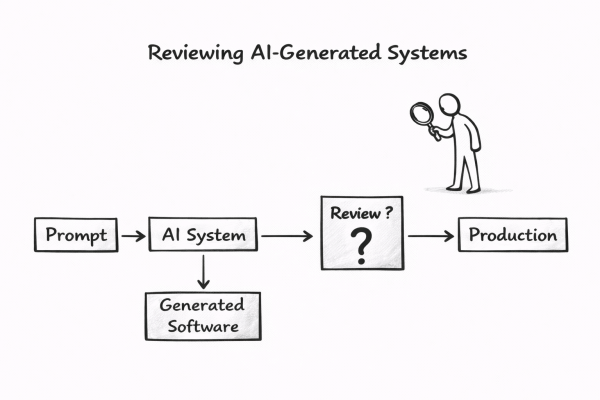
Who Reviews AI-Generated Software?

AI is transforming the software development lifecycle, shifting focus from coding to reviewing AI-generated systems. While AI tools simplify software generation, building trustworthy systems remains complex. Traditional review processes may no longer suffice. This raises a critical question: how can humans responsibly.

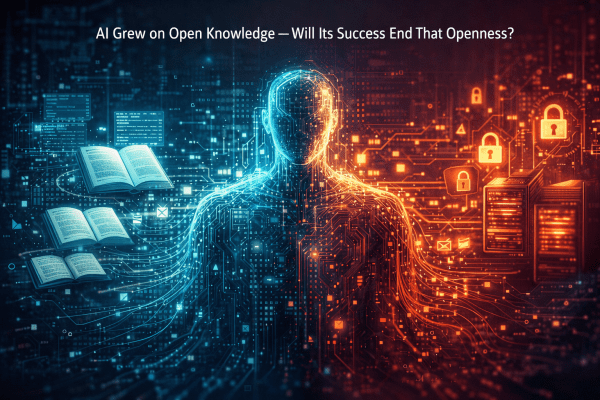
AI Grew on Open Knowledge — Will Its Success End That Openness?

This blog post explores the paradox of AI's growth potential versus the increasing trend toward data protectionism. It highlights how AI tools are hindered by data access limitations, posing risks to innovation. The observation implies that as data becomes more valuable, organizations may withhold it, undermining the openness that has historically fueled AI development.

Blog at WordPress.com.

Up ↑